A/B Test
Checkout Enhanced Experience
+200M GMV/year
Theory in practice:
Small adjustments, big impact
Context
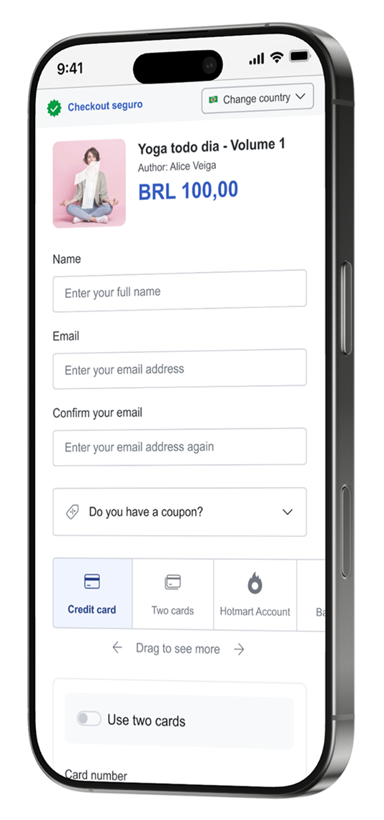
In a high-intent checkout flow, small usability frictions can directly affect completion. This A/B test focused on simplifying the “purchase with two cards” experience by reducing effort, improving clarity, and making card information easier to enter.
The goal was not to redesign the entire checkout, but to identify small interface adjustments that could remove friction at a critical conversion moment.
Analysis
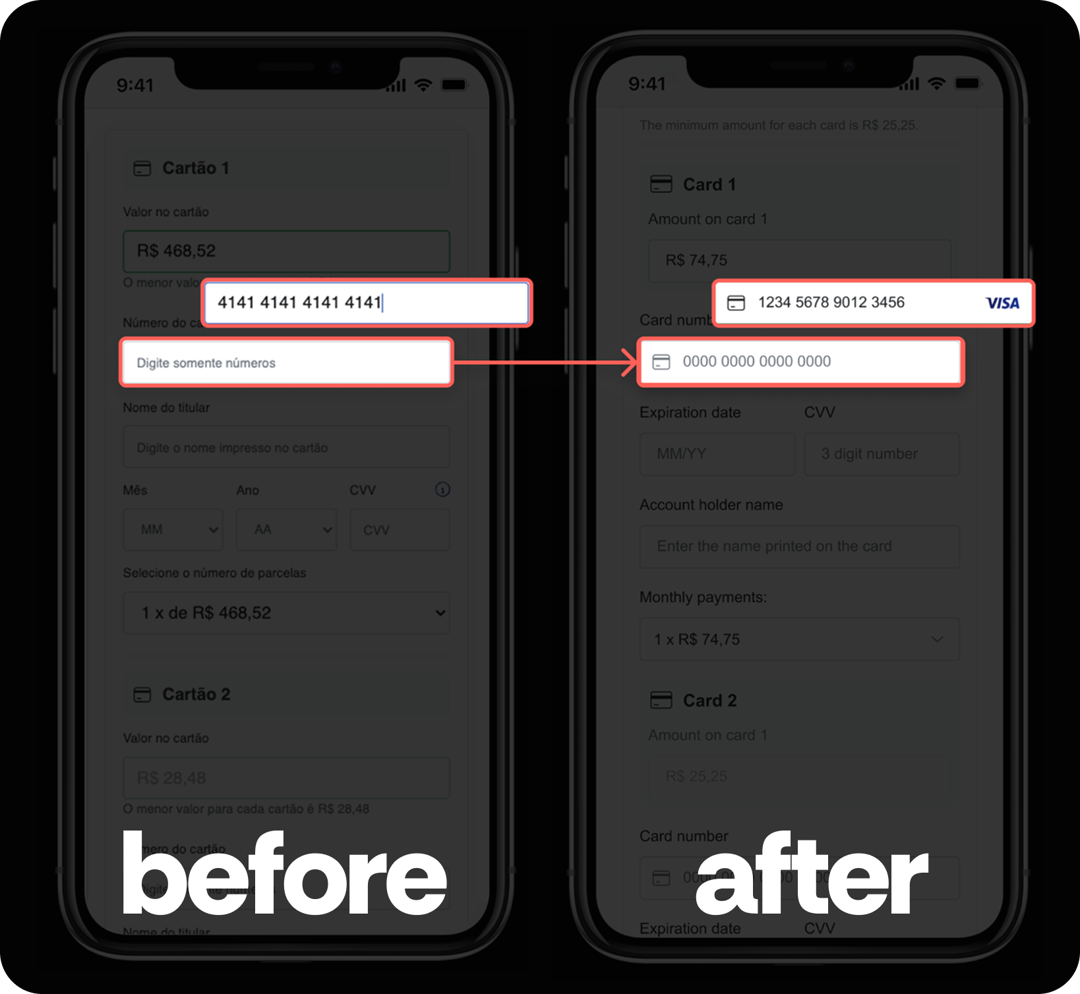
Lack of visual anchors in the card number field
The card number field relied too much on placeholder text, making users work harder to understand the expected input. Adding icons, card brand recognition, and input masks made the field easier to scan and complete.
Issue: users had less visual guidance.
Improvement: clearer affordance, faster recognition, and fewer doubts while entering card information.
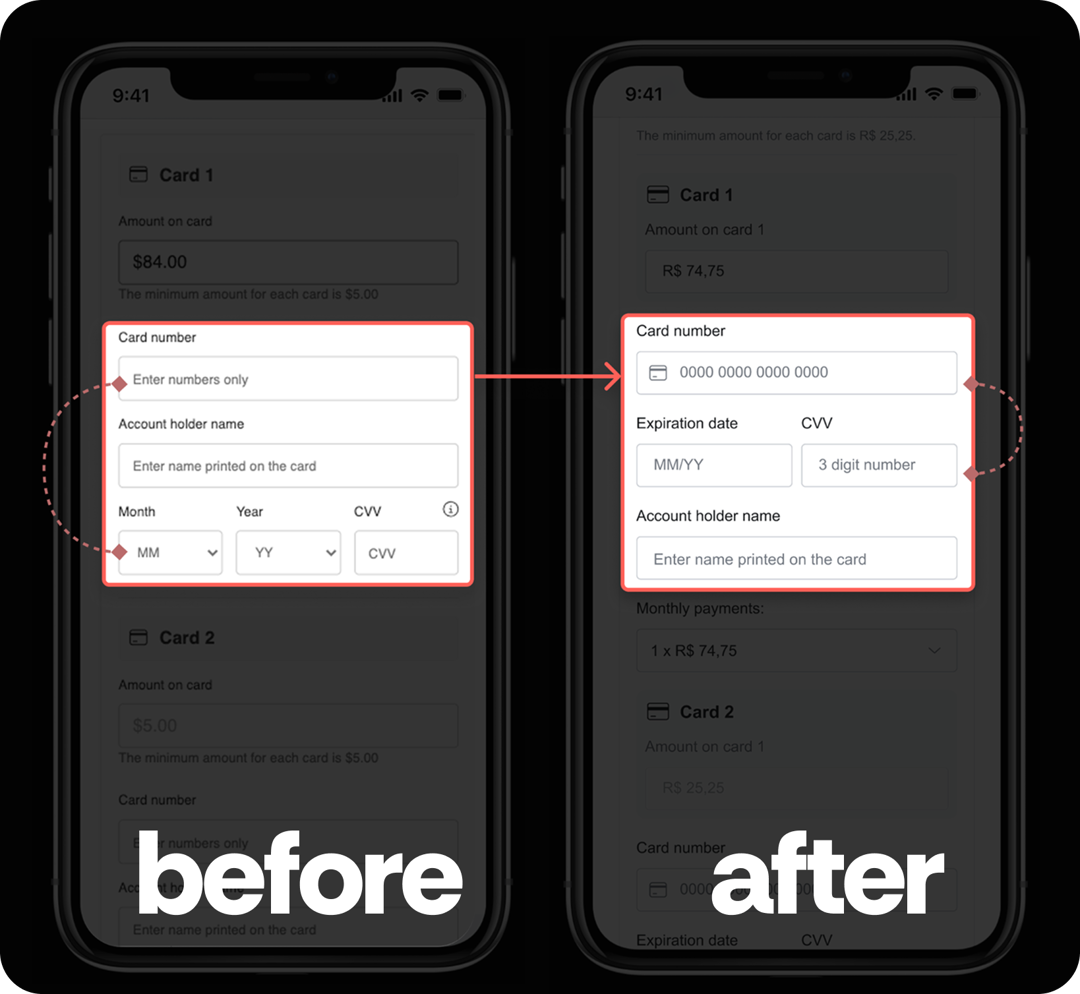
Card fields were not grouped by proximity
Related card fields felt fragmented, forcing users to scan back and forth. Reordering them to match the natural flow of card entry made the form easier to understand and complete.
Issue: related information felt visually fragmented.
Improvement: fields were grouped more logically, reducing scanning effort and making the form easier to complete.
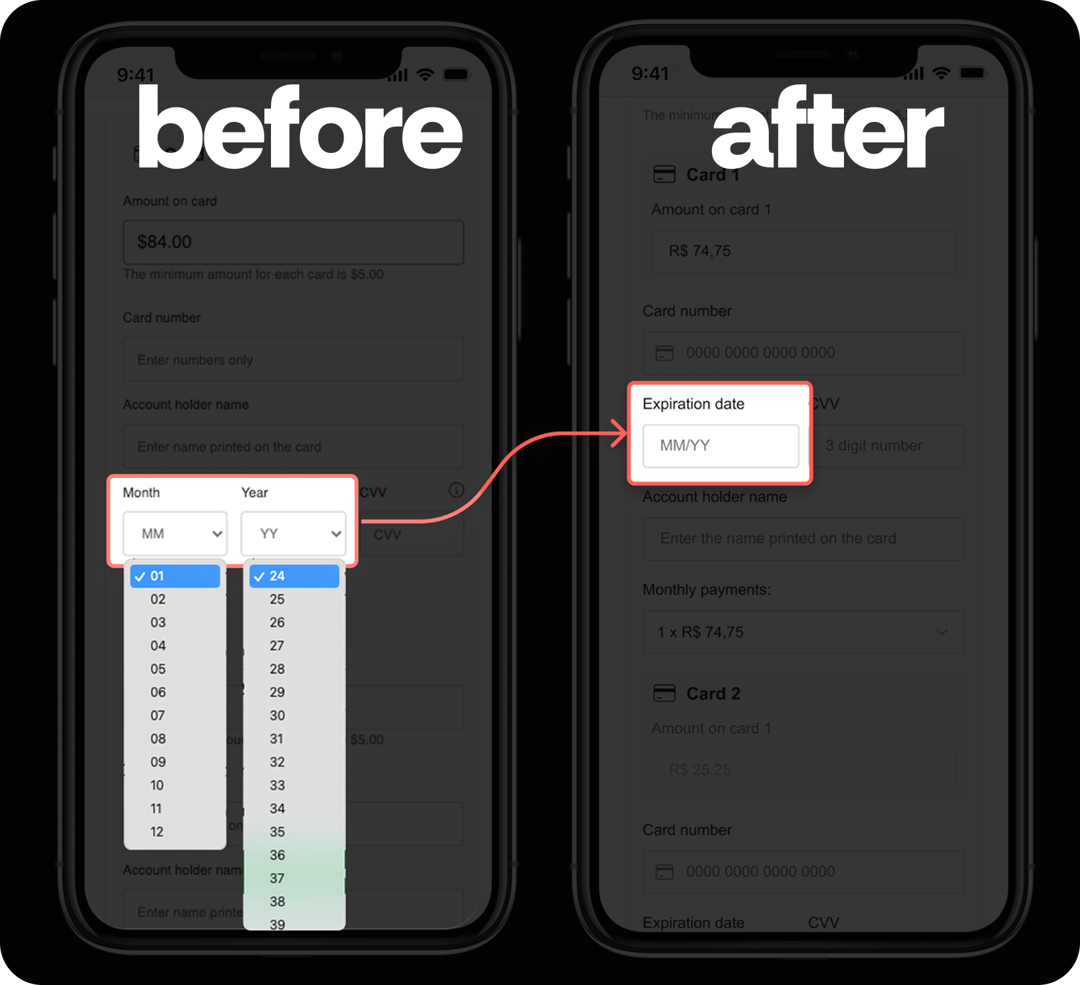
Month and year dropdowns created unnecessary interaction cost
The expiration date required two dropdowns, adding taps and making navigation harder. Combining month and year into one input reduced friction and matched how the date appears on the card.
Issue: too many clicks and limited navigation.
Improvement: one simpler input, less effort, and a faster checkout flow.
Results
→ The new 2-card toggle added R$2.44 per checkout session (+4.01%), projecting an additional R$290M/year in GMV (higher purchasing power driven by increased awareness)
→ Selection of the 2-card option increased 45%, and GMV per 2-card session more than doubled (+107%) (more sessions driven by awareness)
→ Card field completion improved by up to 47%, especially in the Expiration Date (Month-Year) field (better experience)
Theory in practice:
Small adjustments, big impact.